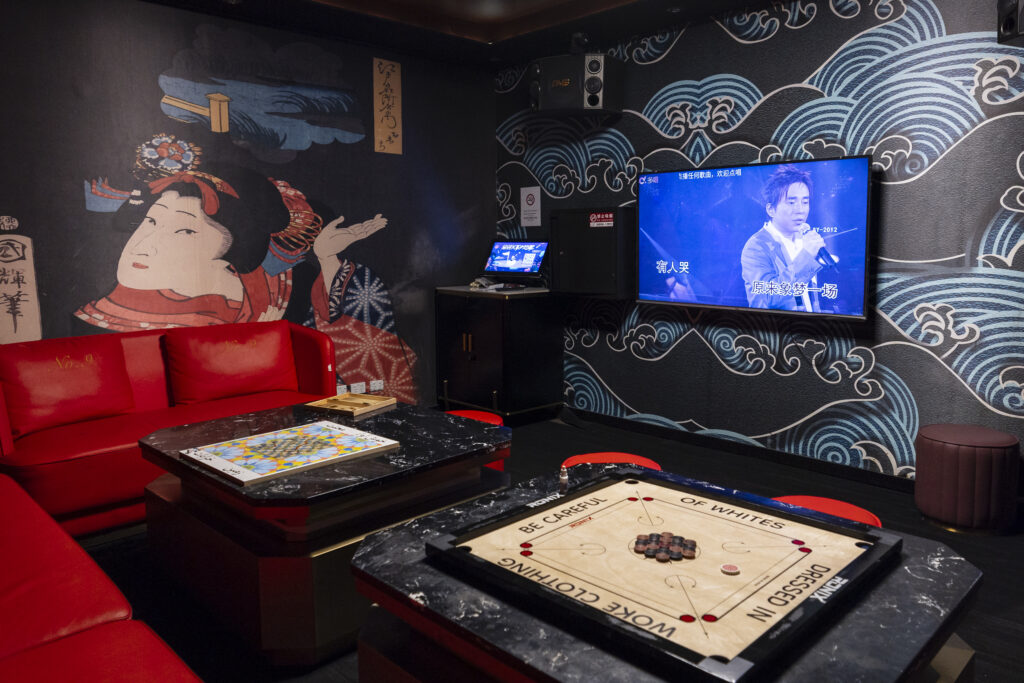
રમત / Ramat is a space for games and social exchange that revolves around personal and shared communal traditions. Guests are invited to actively participate and generate their own experience of playing Carrom, Backgammon or Gyan Caupar.
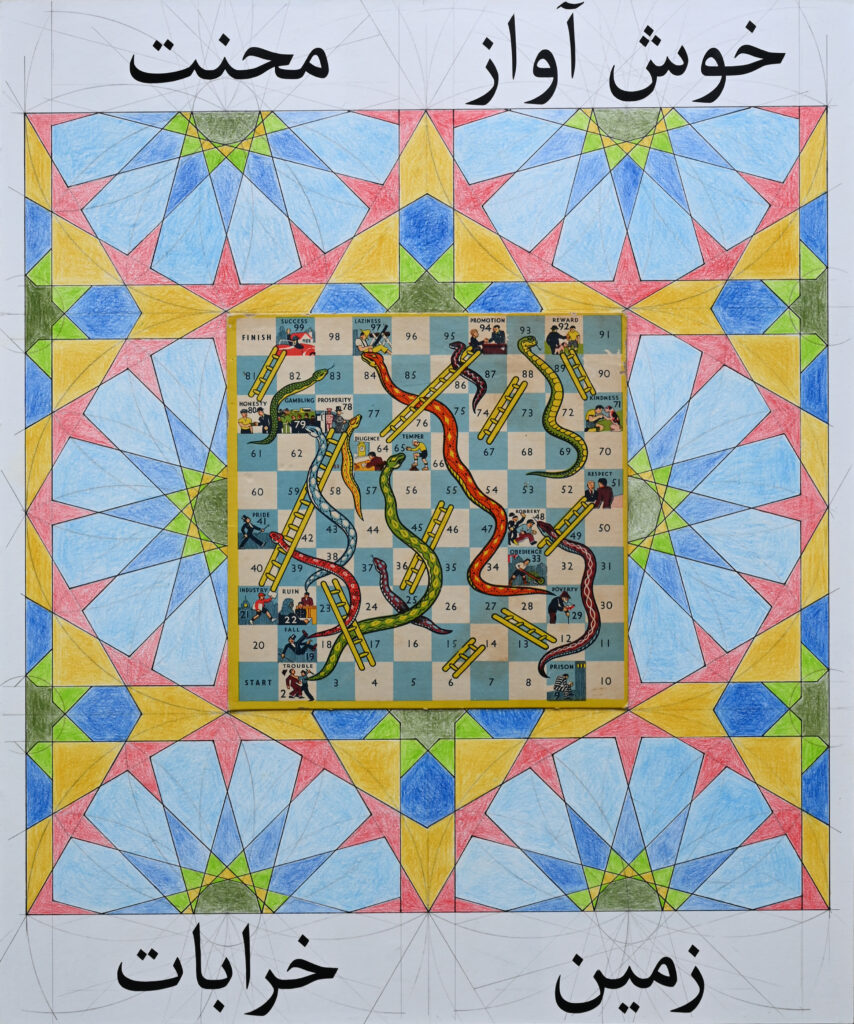
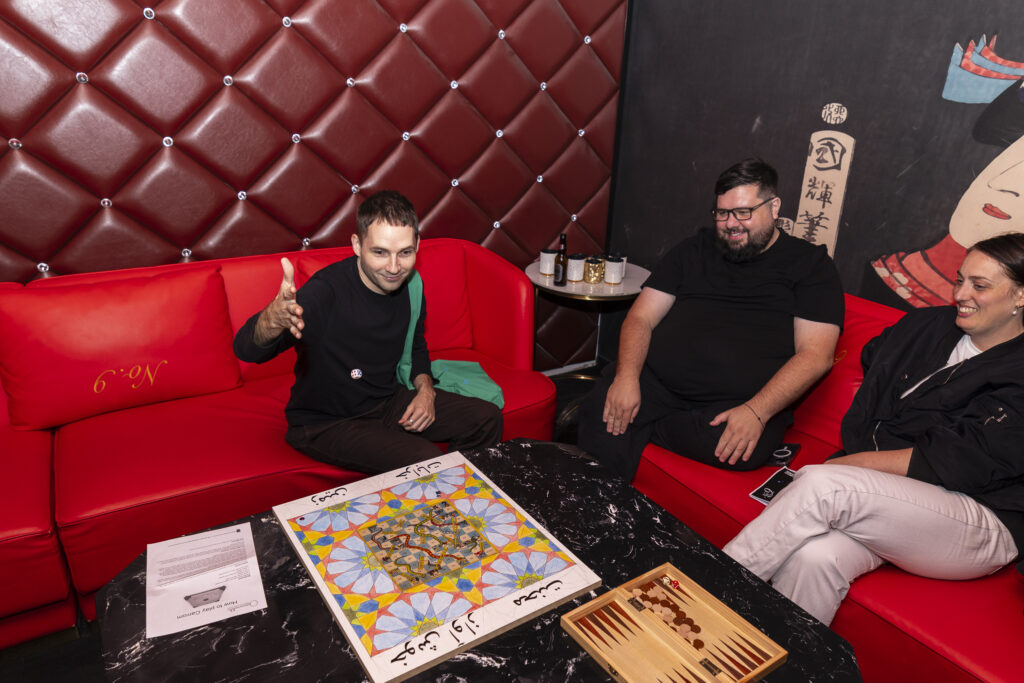
The precise origins of Gyan Caupar are contested. It is widely believed in the Muslim world that it was invented by the Andalusian mystic Muḥyī al-Dīn Ibn ‘Arabī (1165–1240). Interestingly, a version of the game is also attributed to Tibetan Buddhist scholar Sakya Paṇḍita (1182–1251) and used to instruct young people about karma and dharma. The Sufi versions of Snakes and Ladders symbolize the spiritual path of a murid as they advance towards higher spiritual plane. The boards are inscribed with terms for the stages of the path. Early on in their journey there are many snakes and the murid is particularly vulnerable. As the disciple gains awareness there are increased insight that launch them upward. However, the murid must remain vigilant as the risk of descending is always present. Gyan Caupar was appropriated by colonial Britain in the late nineteenth century. The game was oriented towards bourgeois Victorian morality in which players are encouraged to be polite, obey the law, work hard, accumulate capital, and be successful.
Board games have been played in many parts of the world for millennia with the oldest found in ancient Mesopotamia. The Royal Game of Ur is believed to date back 5000 years and is considered the precursor of the game known in English as Backgammon. There is evidence that variations of the game were played in ancient Egypt, Sumeria, Persia, Greece, Rome, and the Far East.
Games are an arena for action, they require players to simultaneously hold multiple viewpoints – to view their actions from the standpoint of other players within the aim, purpose and rules of the game. Childhood play helps us identify the viewpoints of the community, and our distinct selves in relation to the communities we are part of. Exchanges around the game table are also a means of experimenting with the communal role of art as a catalyst for new form of social interaction.
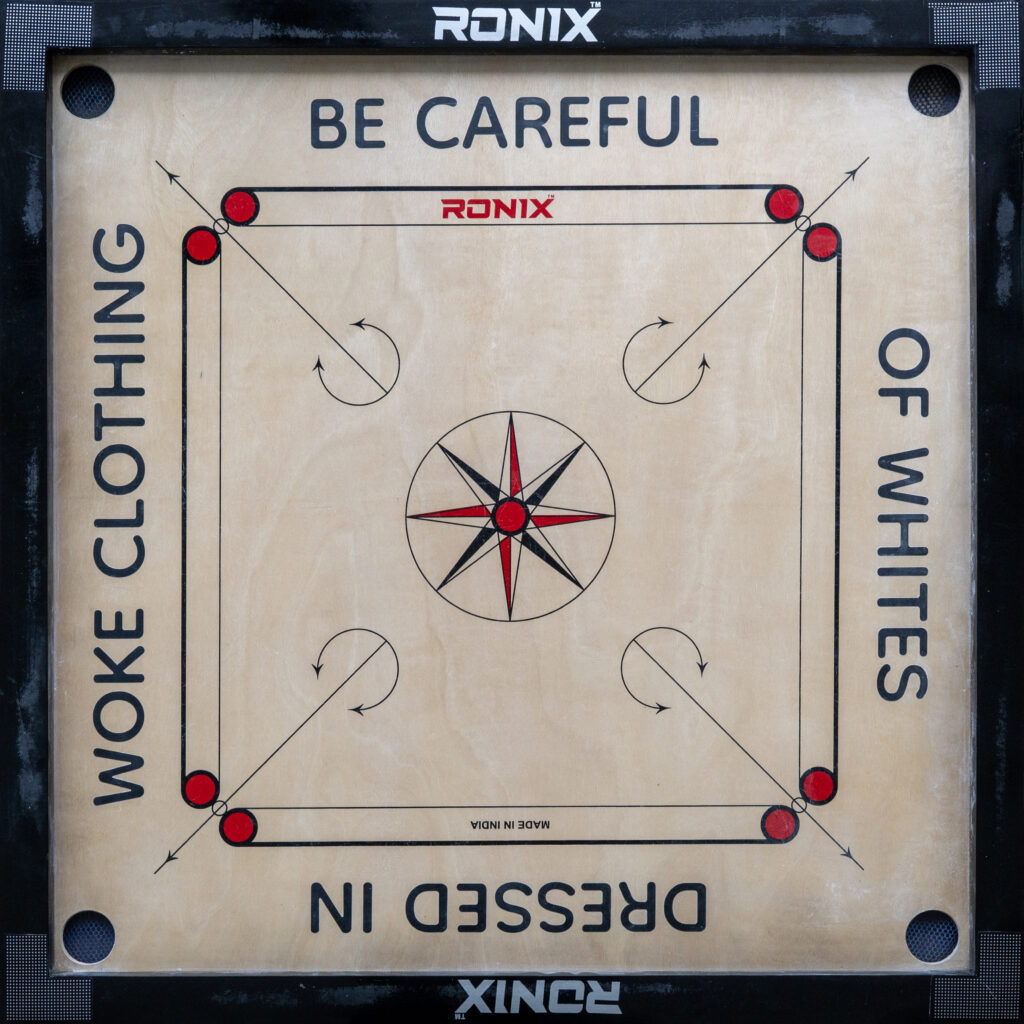
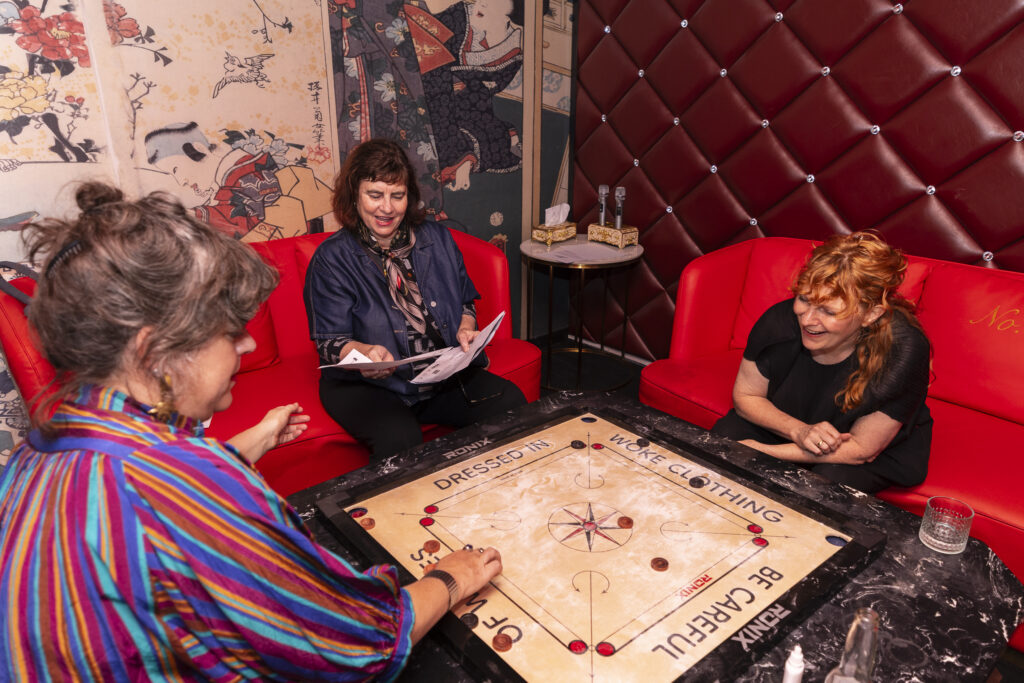
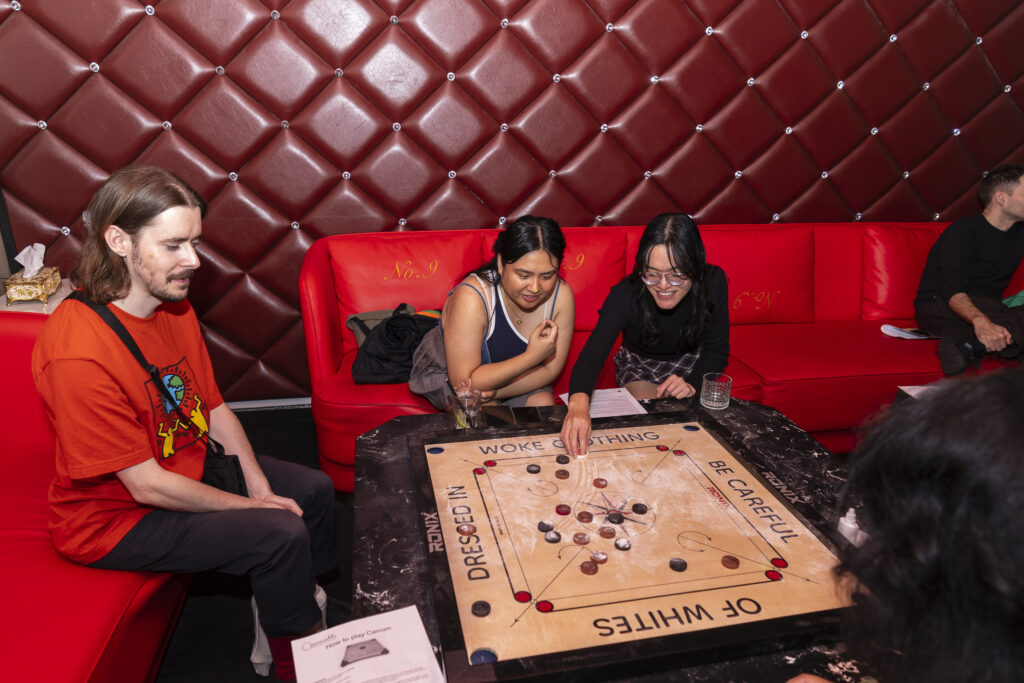
The modern form of Carrom is considered to have originated in India and remains popular with the Indian diaspora. The games in રમત / Ramat raise questions about cultural appropriation and commodification with the words of Ngarrindjeri and Kaurna poet Dominic Guerrera on the carrom board cautioning:
“BE CAREFUL OF WHITES DRESSED IN WOKE CLOTHING”
bell hooks states “within commodity culture, ethnicity becomes spice, seasoning that can liven up the dull dish that is mainstream white culture.” The commodification and consumption of cultural otherness is increasingly tied to gentrification as exemplified by the changing perceptions of Chinatowns in major Western cities across the world. The appreciation and consumption of cultural difference by members of the white majority, referred to by anthropologist Ghassan Hage as “cosmo-multiculturalists”, can be a display of cultural capital to signal and differentiate an attitude of open, self-aware, worldliness from racists. However, the asymmetrical power relation leads to a dynamic in which mainstream white culture is able to engage with cultural difference by adopting, absorbing and commodifying an aesthetic of cultural difference into its music, food and fashion without fostering genuine attempts at equity.
રમત / Ramat was included in on-site curated by Alice McCool, Yusuf Ali Hayat and Kim Munro at:
No.9 Karaoke, Tarntanya/Adelaide
2026
on-site is part of OSCA’s state-wide artist commissioning initiative – Projects of the Everyday